
5 Energy-Efficient Benefits of Insulated Metal Wall Panels in Texas
Energy costs represent one of the largest ongoing expenses for commercial building owners throughout Texas, where intense summer heat drives cooling demands to peak levels for months at a time. Insulated Metal Panels (IMPs) have emerged as a high-performance building envelope solution that directly addresses energy efficiency challenges while delivering additional benefits that enhance building value and occupant comfort. Understanding how these advanced panel systems reduce energy consumption and improve building performance helps architects, contractors, and property owners make informed decisions that impact both immediate construction budgets and long-term operational costs.
Key Takeaways
- Insulated metal panels combine structural skin and insulation in a single component, eliminating thermal bridging
- High R-values ranging from R-16 to R-40+ provide superior thermal resistance for Texas climates
- Continuous insulation reduces air infiltration and improves HVAC efficiency by up to 50%
- The airtight building envelope created by IMPs enhances indoor comfort and reduces temperature fluctuations
- Faster installation compared to traditional wall assemblies reduces construction timelines and labor costs
- Long-term energy savings typically offset higher initial material costs within five to seven years
Understanding Insulated Metal Panel Construction
Insulated Metal Panels represent an evolution in building envelope technology, combining exterior and interior metal skins with a continuous insulation core into a single prefabricated component. The typical IMP consists of two steel facings—usually twenty-six gauge or heavier—bonded to an insulating foam core. This sandwich construction creates a rigid, structural panel that serves simultaneously as cladding, insulation, and interior finish in many applications.
The insulation core materials vary depending on performance requirements and budget considerations. Polyisocyanurate (PIR) foam offers the highest R-value per inch, making it ideal for applications where maximizing thermal performance within limited wall thickness is critical. Expanded polystyrene (EPS) provides excellent insulation properties at a lower cost point, making it popular for budget-conscious projects. Mineral wool cores offer superior fire resistance and acoustic performance, though with slightly lower R-values than foam alternatives.
Alpine Sheet Metal Systems works with leading manufacturers to provide insulated metal panels that meet the specific performance requirements of Dallas-Fort Worth commercial projects. The panels are manufactured in controlled factory conditions, ensuring consistent quality and precise dimensions that facilitate rapid, accurate installation. This prefabrication approach eliminates the coordination challenges and quality control concerns associated with field-assembled wall systems.
Benefit 1: Superior Thermal Performance Through Continuous Insulation
The primary energy efficiency advantage of insulated metal panels stems from their continuous insulation design. Traditional wall assemblies typically use metal studs or framing members that penetrate through the insulation layer, creating thermal bridges where heat can bypass the insulation. These thermal bridges can reduce the effective R-value of a wall assembly by thirty percent or more, significantly compromising energy efficiency despite adequate insulation thickness.
Insulated metal panels eliminate thermal bridging by providing uninterrupted insulation across the entire wall surface. The foam core extends continuously from panel edge to panel edge, with no structural members penetrating through the insulation layer. This continuous insulation approach ensures that the rated R-value of the panel represents the actual thermal performance of the installed wall system, not a theoretical value compromised by thermal bridging.
The impact of this superior thermal performance becomes particularly significant in the Texas climate, where temperature differentials between indoor and outdoor environments can exceed forty degrees Fahrenheit for extended periods. During summer months when outdoor temperatures regularly reach the mid-nineties or higher, the continuous insulation provided by IMPs dramatically reduces heat gain through the building envelope. This reduction in thermal load directly translates to decreased HVAC runtime, lower energy consumption, and reduced utility costs.
Benefit 2: Enhanced Air Tightness and Reduced Infiltration
Air infiltration represents a major source of energy loss in commercial buildings, often accounting for twenty-five to forty percent of heating and cooling costs. When unconditioned outdoor air leaks into a building, the HVAC system must work harder to maintain desired indoor temperatures and humidity levels. Traditional wall assemblies with multiple components and numerous joints create many potential pathways for air infiltration, particularly if construction quality is inconsistent.
Insulated metal panels create an exceptionally airtight building envelope when properly installed. The panels interlock with sophisticated joint designs that minimize air leakage pathways, while sealants and gaskets at panel connections create continuous air barriers. Factory-controlled manufacturing ensures consistent panel dimensions and joint configurations, eliminating the variability that often compromises air tightness in field-assembled systems.
The energy savings from reduced air infiltration extend beyond simple heating and cooling loads. When conditioned air escapes and unconditioned air enters, the HVAC system must also manage the moisture content of the infiltrating air. In humid Texas summers, this moisture load can be substantial, requiring significant energy for dehumidification. The airtight envelope created by insulated metal panels reduces this moisture infiltration, decreasing the latent cooling load and further improving energy efficiency.
Benefit 3: Improved HVAC Efficiency and Reduced Equipment Sizing
The superior thermal performance and air tightness of insulated metal panel systems directly impact HVAC equipment requirements and operational efficiency. When a building envelope minimizes heat gain and air infiltration, the heating and cooling equipment can be sized more accurately to actual loads rather than being oversized to compensate for envelope deficiencies. Right-sized HVAC equipment operates more efficiently, cycles properly, and provides better humidity control than oversized systems.
For new construction projects, the reduced heating and cooling loads enabled by IMP wall systems may allow for smaller, less expensive HVAC equipment. The capital cost savings from downsized mechanical systems can partially offset the higher material cost of insulated metal panels compared to less efficient wall assemblies. For renovation projects, the improved building envelope may extend the useful life of existing HVAC equipment by reducing the load it must handle.
HVAC operational efficiency improves when equipment serves a building with a high-performance envelope. The reduced runtime required to maintain comfortable temperatures decreases wear on mechanical components, potentially extending equipment life and reducing maintenance costs. The more stable indoor environment created by an efficient building envelope allows HVAC systems to operate in their optimal efficiency range rather than constantly responding to temperature swings caused by poor envelope performance.
Benefit 4: Enhanced Occupant Comfort and Productivity
While energy efficiency focuses primarily on cost savings, the comfort improvements delivered by insulated metal panels provide additional value that building owners and tenants appreciate. The continuous insulation and airtight construction create more uniform interior temperatures, eliminating the cold spots near exterior walls that often occur with less effective insulation systems. This temperature uniformity enhances occupant comfort and reduces complaints about uncomfortable work environments.
The thermal mass provided by the metal skins and insulation core helps moderate indoor temperature swings, creating a more stable interior environment. This thermal stability reduces the frequency of HVAC cycling and creates a more consistent comfort level throughout the day. For commercial buildings where occupant productivity is paramount—such as offices, educational facilities, and healthcare environments—the comfort improvements delivered by high-performance building envelopes can justify the investment through enhanced occupant satisfaction and performance.
Acoustic performance represents an often-overlooked benefit of insulated metal panels. The sandwich construction with foam or mineral wool cores provides effective sound attenuation, reducing exterior noise transmission into the building. For commercial properties located near highways, airports, or other noise sources common in the Dallas-Fort Worth metroplex, this acoustic performance enhances the interior environment while contributing to energy efficiency by reducing the temptation to open windows that would compromise the building envelope.
Benefit 5: Lifecycle Cost Advantages and Return on Investment
Evaluating the true cost of building envelope systems requires looking beyond initial material and installation expenses to consider lifecycle costs over the building’s useful life. While insulated metal panels typically cost more initially than traditional wall assemblies, the energy savings they deliver can result in positive return on investment within five to seven years for most commercial applications in Texas. Beyond the payback period, the energy savings continue to accrue, providing ongoing value throughout the building’s lifetime.
The durability of insulated metal panel systems contributes to favorable lifecycle costs. The factory-finished metal skins resist fading, chalking, and corrosion, maintaining their appearance with minimal maintenance. The structural integrity of the sandwich panel construction ensures long-term performance without the sagging, settling, or compression that can compromise the effectiveness of some insulation materials over time. Many IMP manufacturers offer warranties of thirty years or more, providing assurance of long-term performance.
Energy code compliance and green building certification represent additional value considerations. As energy codes become increasingly stringent, insulated metal panels provide a straightforward path to compliance with thermal performance requirements. For projects pursuing LEED certification or other green building standards, the energy efficiency of IMPs contributes valuable points while supporting sustainability goals that enhance building marketability and tenant appeal.
Selecting the Right Insulated Metal Panel System
Choosing the optimal insulated metal panel system for your Texas commercial building project requires evaluating several factors. Climate considerations are paramount—the Dallas-Fort Worth area’s cooling-dominated climate favors high R-value assemblies that minimize heat gain. Panel thickness, core material, and facing gauge should be selected based on structural requirements, aesthetic preferences, and performance goals.
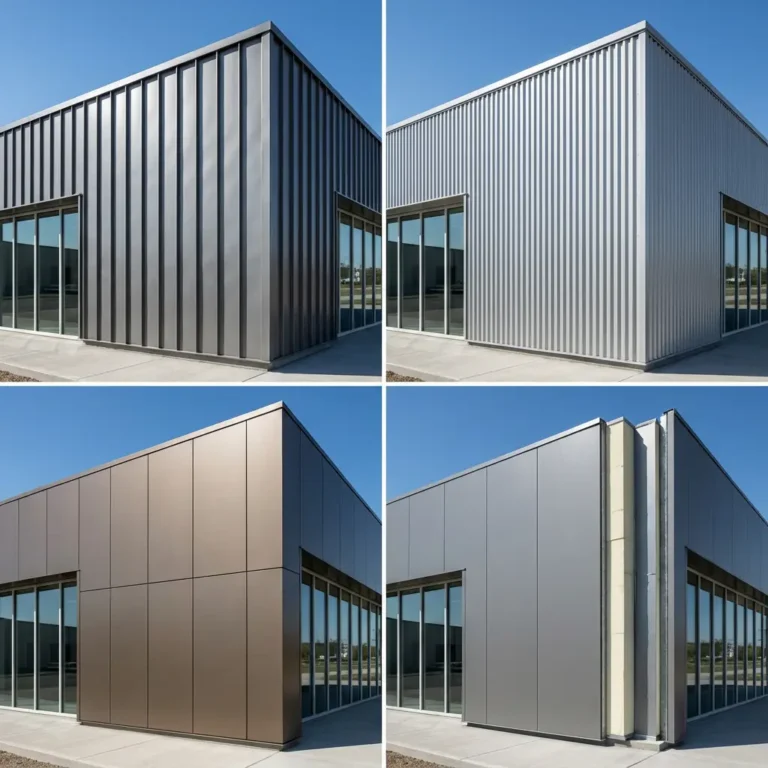
Architectural compatibility ensures that the panel system complements your building design. Insulated metal panels are available in various profiles, finishes, and colors, allowing them to suit contemporary, traditional, or industrial architectural styles. The panels can be installed horizontally or vertically, with flush or reveal joints, providing design flexibility while maintaining superior energy performance.
If you’re considering metal wall panel options for your commercial project, understanding how different systems compare helps ensure optimal selection. How to Choose the Right Metal Wall Panel System for Your Building Design provides comprehensive guidance on evaluating various panel types and their applications.
Professional Installation Ensures Performance
The energy efficiency benefits of insulated metal panels can only be realized through proper installation. Panel joints must be sealed correctly, attachment methods must prevent thermal bridging at fastener locations, and transitions to other building components must maintain envelope continuity. Working with experienced installers who understand IMP systems ensures that your building achieves the energy performance that justified the investment in high-efficiency envelope systems.
Alpine Sheet Metal Systems brings over two decades of experience fabricating and installing insulated metal panel systems for commercial buildings throughout Texas, Oklahoma, and Louisiana. Our certified metal technicians understand the installation details that separate adequate performance from exceptional results. We work closely with architects and contractors to ensure that every project achieves its energy efficiency goals while meeting aesthetic and budgetary requirements.
Ready to reduce energy costs and improve building performance with insulated metal wall panels? Contact us today to discuss your commercial building project and discover how insulated wall panels in Dallas can deliver both immediate and long-term value. Our team will help you evaluate options, select the optimal system for your specific requirements, and execute installation with the precision and attention to detail that ensures lasting performance.