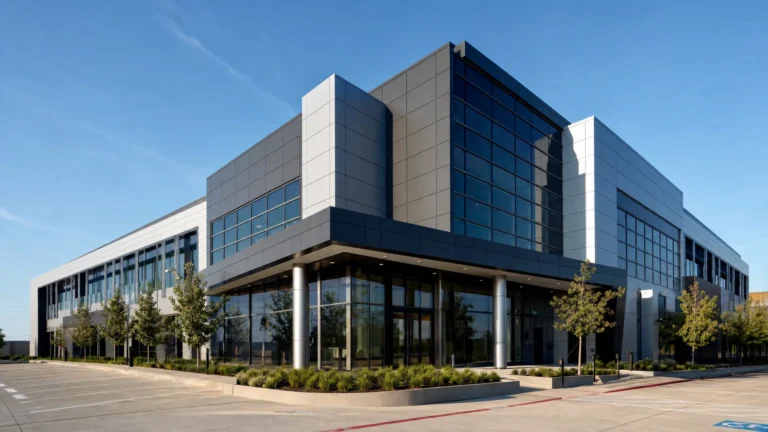
What Are the Benefits of ACM Panels for Commercial Buildings in Dallas, TX?
Aluminum Composite Material (ACM) panels offer commercial buildings in Dallas, TX, ten key advantages, including lightweight construction, durability, design flexibility, low maintenance, cost efficiency, and versatile applications. These architectural metal panels provide a modern exterior finish while supporting efficient installation and long-term building performance when properly specified, fabricated, and installed.
For architects, general contractors, developers, and commercial property owners, choosing the right exterior cladding is an important decision. Building materials must deliver the desired appearance while meeting structural requirements, performance expectations, and project budgets.
At Alpine Sheet Metal Systems, we specialize in architectural sheet metal fabrication and installation for commercial projects throughout Dallas-Fort Worth, Texas, and surrounding states. Our team fabricates ACM panels in-house and installs them with our own crews, providing greater coordination and control throughout the construction process.
Whether you’re designing a new commercial development, updating an aging facade, or evaluating exterior cladding options, understanding the advantages of ACM panels can help you make an informed decision.

Why Are Aluminum Composite Panels a Popular Choice for Commercial Construction?
Aluminum Composite Material panels are widely used in commercial architecture because they combine the appearance of solid metal with a lightweight, adaptable panel structure.
ACM panels typically consist of two thin aluminum sheets bonded to a core material. Depending on the product and application, the core may be polyethylene-based or formulated for improved fire performance.
These panels are commonly used on office buildings, retail centers, healthcare facilities, educational institutions, automotive dealerships, and other commercial properties.
Here are ten reasons architects and contractors choose ACM panels for commercial construction.
1. How Do Lightweight ACM Panels Benefit Commercial Buildings?
ACM panels provide the appearance of solid aluminum cladding with substantially less weight than an equivalent-thickness solid aluminum plate.
Their lightweight construction can simplify material handling, transportation, and installation. It may also reduce the loads imposed on supporting framing, depending on the complete cladding assembly.
For general contractors managing large commercial projects, easier material handling can improve installation efficiency and help crews work more effectively.
2. Are ACM Panels Durable Enough for Texas Weather?
Properly specified ACM panels can withstand demanding exterior conditions, including intense sunlight, wind, rain, and seasonal temperature changes.
Dallas-Fort Worth experiences hot summers, strong thunderstorms, and occasional hailstorms. These conditions make exterior material selection particularly important.
High-performance architectural coatings help resist fading and weathering, while properly engineered attachment systems accommodate thermal movement.
However, ACM panels are not immune to impact damage. Panel thickness, coating selection, fastening methods, and installation quality all influence long-term performance.
3. Do ACM Panels Offer Fire-Resistant Options?
ACM panels are available with different core materials, including fire-retardant and other specialized core formulations designed for specific building requirements.
Fire performance is particularly important for commercial buildings where exterior wall assemblies must comply with applicable building codes.
Architects and contractors should verify:
- The panel’s core composition and fire classification
- Applicable building height and occupancy requirements
- Required exterior wall assembly testing
- Compatibility with the specified insulation and weather barrier
Not all ACM panels are fire-resistant or interchangeable. Compliance depends on the complete wall assembly, not simply the panel itself.
4. How Much Maintenance Do ACM Panels Require?
ACM panels are generally a low-maintenance exterior cladding option.
Unlike certain traditional building materials, factory-finished aluminum panels do not require routine repainting when their coatings remain in good condition.
Periodic cleaning helps remove dirt, pollutants, and environmental buildup. Building owners should also inspect panel joints, sealants where applicable, and attachment conditions as part of regular exterior maintenance.
For commercial property managers, reduced maintenance demands can contribute to lower long-term ownership costs.
5. What Colors and Finishes Are Available for ACM Panels?
One of the biggest advantages of ACM panels is their extensive range of architectural finishes.
Available options may include:
- Solid and custom colors
- Metallic finishes
- Wood-look finishes
- Stone-inspired appearances
- Matte and high-gloss surfaces
- Specialty architectural coatings
These options allow architects to achieve distinctive building designs without relying on heavier or more expensive materials for every application.
Custom fabrication also makes it possible to create coordinated corners, reveals, soffits, and other architectural details.
6. Can ACM Panels Improve a Building’s Appearance?
ACM panels create clean lines, consistent finishes, and contemporary architectural profiles.
They can be fabricated into flat panels, column covers, fascia systems, and other custom shapes that help define a building’s exterior.
For Dallas-Fort Worth commercial properties, ACM cladding is particularly useful for modernizing outdated facades.
A thoughtfully designed metal panel system can refresh a building’s appearance, reinforce brand identity, and create a more cohesive exterior without requiring an entirely new building.
7. Are ACM Panels Cost-Effective for Commercial Projects?
ACM panels can offer long-term value through efficient installation, durable finishes, and relatively low maintenance requirements.
Actual project costs depend on several factors, including:
- Panel thickness and core type
- Finish and coating specifications
- Building height and accessibility
- Panel dimensions and fabrication complexity
- Attachment system and installation requirements
Although ACM is not automatically the least expensive cladding material, its combination of appearance, performance, and installation efficiency makes it a competitive option for many commercial applications.
8. Are Aluminum Composite Panels Recyclable?
ACM panels contain aluminum, a material that can be recycled and reused.
However, because ACM panels combine metal skins with a bonded core, recycling typically requires specialized separation or processing.
Recycling availability depends on the panel composition and local recycling capabilities.
For projects pursuing sustainability goals, architects should review manufacturer documentation, recycled content information, and environmental product declarations when available.
9. Where Can ACM Panels Be Used on Commercial Buildings?
ACM panels are versatile enough to accommodate numerous exterior and interior architectural applications.
Common commercial uses include:
- Exterior wall cladding and facades
- Building entrances and canopies
- Soffits and fascia systems
- Column covers
- Architectural accent features
- Retail storefronts and branded exteriors
- Interior decorative wall panels
This flexibility allows designers to maintain a consistent appearance across multiple architectural elements.
10. Are ACM Panels Easy to Fabricate and Install?
ACM panels can be fabricated efficiently into precise architectural shapes, but successful installation requires careful planning and experienced workmanship.
Proper field measurements, shop drawings, panel fabrication, attachment systems, and joint detailing all contribute to the finished result.
Alpine Sheet Metal Systems fabricates ACM panels in-house and installs them using our own crews. This approach helps maintain coordination between fabrication and installation while reducing the complications that can arise when multiple independent companies handle different stages of the work.
For general contractors, that means a more coordinated process from shop drawings through final installation.
Frequently Asked Questions About ACM Panels
How Long Do ACM Panels Last on Commercial Buildings?
ACM panels can provide decades of service when properly specified, installed, and maintained. Their lifespan depends on coating quality, environmental exposure, panel construction, and maintenance practices.
What Is the Difference Between ACM Panels and Solid Aluminum Panels?
ACM panels contain two aluminum skins bonded to a core, while solid aluminum panels consist of a single metal sheet or plate. ACM typically offers lower weight at comparable overall thickness, while solid aluminum provides different structural, fabrication, and fire-performance characteristics.
Can Damaged ACM Panels Be Repaired or Replaced?
Yes. Depending on the extent of the damage and the panel system, individual ACM panels may be repaired or replaced without removing the entire facade. Matching existing colors, finishes, and panel dimensions is important for achieving a consistent appearance.
Are ACM Panels Waterproof?
ACM panels resist water penetration through their panel faces, but the panels alone do not make an exterior wall waterproof. Properly designed joints, flashing, drainage, weather barriers, and installation details are essential for managing moisture.
Choose Alpine Sheet Metal Systems for ACM Panel Fabrication and Installation in Dallas-Fort Worth
Selecting the right architectural cladding is only part of a successful commercial construction project. The quality of fabrication and installation plays an equally important role in the building’s appearance and long-term performance.
At Alpine Sheet Metal Systems, we bring fabrication and installation together under one team. From custom ACM panels and architectural metal wall systems to commercial facade repairs and restoration, we understand the details that make metal cladding work.
Planning a Commercial ACM Panel Project? Let’s Talk.
Whether you’re an architect developing a design, a general contractor preparing a bid, or a property owner considering a facade upgrade, Alpine Sheet Metal Systems is ready to help.
We make it. We install it. We own it.
Contact Alpine Sheet Metal Systems today to discuss your commercial ACM panel fabrication and installation needs in Dallas-Fort Worth and beyond.